
November 23rd, 2026
Area
Guide
Rent
Living in Gotanda, Tokyo: Fast Trains, a Riverside Rebuild and an Honest Look at the Station Front
Last reviewed 23 Nov 2026 · 30 min read
Living in Gotanda means giving up a little polish at the station front in return for one of the quickest rides to Shibuya, Shinagawa and Shinjuku on the Yamanote Line. Gotanda Station is where three railway operators meet, and 110,321 people board a JR train there every day, which puts it 27th among all JR East stations.
This guide is written for people who will live here, not people passing through on the way to a hotel. We cover what rent really looks like, how long the trains take, what the police data says block by block, and where Japanese residents and English-language guides tell different stories.
The short version: Gotanda suits people who work around Shinagawa, Shibuya or Shinjuku, who want a one-person apartment at a lower price than Meguro, and who are happy to pick a quiet block a few minutes from the station. It does not suit anyone who wants a calm station front at midnight, a big family apartment on a modest budget or a leafy village feel.
One note on the name. "Gotanda" is both a station and two address names, Higashi-Gotanda (東五反田, east) and Nishi-Gotanda (西五反田, west), which together cover 13 chome in Shinagawa Ward. When we give resident and crime numbers for "Gotanda", we mean those 13 chome.
At a Glance Gotanda, Tokyo Ward Shinagawa Ward (品川区), 418,522 residents in 243,206 households (1 Aug 2026) Train lines JR Yamanote Line (JY23), Tokyu Ikegami Line (terminus), Toei Asakusa Line (A-05) To Shinjuku About 15 minutes on the Yamanote Line, no transfer To Tokyo Station About 17 to 19 minutes on the Yamanote Line, no transfer Typical 1K rent About ¥113,000 Typical 2LDK rent About ¥295,000 Best for Singles and couples who work in Shinagawa, Shibuya or central Tokyo and want a short commute at a lower rent than Meguro Not ideal for Light sleepers close to the station, families who want quiet streets and big parks at the door, anyone who dislikes late-night drinking crowds
Is Gotanda a Good Place to Live?
Yes, if you choose the block as carefully as you choose the apartment.
Gotanda gives you three lines at one station, a six-minute ride to Shinagawa and a Yamanote Line ride of about 15 minutes to Shinjuku. It costs noticeably less than the Meguro side of the line, and the neighborhood is changing fast as a large riverside project goes up beside the Meguro River.
What it does not give you is a quiet, tidy station front. The streets around the east exit have a long nightlife history, police data shows far more recorded crime there than a few blocks away, and Japanese residents are blunt about the love hotels, the drinking crowds and the touts. We will show you the numbers so you can judge for yourself.
Two things catch newcomers off guard. The first is how much the experience changes within five minutes' walk: a main road with noise and bars, then a side street with almost no traffic. The second is the mix of people, because in the 13 chome of Gotanda the average household has only 1.63 people, so this is overwhelmingly a place for people living alone or as a couple.
Gotanda is a good place to live for anyone who treats the station front as a commuting corridor and the back streets as home.
Where Is Gotanda?
Gotanda is in the north of Shinagawa Ward (品川区), on the Yamanote Line between Osaki to the south and Meguro to the north.
Shinagawa Ward's own population statistics show 418,522 residents in 243,206 households on 1 August 2026. The ward publishes these figures in Japanese, like most of the official pages cited here, and breaks them down by chome.
The 13 chome of Higashi-Gotanda and Nishi-Gotanda add up to 42,664 residents in 26,169 households (our arithmetic from the ward's chome table), about 10 percent of the ward. The ward does not publish a foreign-resident count by chome, so we cannot say how many of them are foreign nationals.
Shinagawa is one of Tokyo's quieter, more residential wards despite its business hubs, and our Shinagawa Ward resident guide covers the other neighborhoods in it.
Gotanda is a mid-sized neighborhood on the busy northern edge of a ward that is better known for Shinagawa Station.
What Is Gotanda Like?
Gotanda is a business and nightlife district with residential streets in every direction.
Japanese relocation and area guides describe two faces. One is the area around the station, with offices, bars and a long history as an entertainment district. The other is the quieter residential land on either side, where one guide says Higashi-Gotanda and Nishi-Gotanda feel entirely different and recommends the west side for living.
The English-language picture is flatter. An English-language agency guide describes Gotanda as primarily a business district, with an area that has a stigmatized past that is "quite easy to avoid", and says nothing about the touts, the noise or the smell of the river. We checked, and those topics simply do not appear in it.
That gap is the most useful thing to understand. Japanese residents talk about love hotels, drunks and the river smell because they live next to them, while English guides focus on commutes and rent because their readers are shopping for an address.
Neither view is wrong. They are describing different times of day on the same street.
Transport Access and Commute Times
Transport is the reason most people choose Gotanda, and it is a good reason.
Three railway operators share the station: JR East (the Yamanote Line, station number JY23), Tokyu (the Ikegami Line, which ends here) and Toei (the Asakusa Line, station number A-05). JR Gotanda boarded 110,321 people a day in fiscal 2024, ahead of Meguro with 93,384 and behind Osaki with 145,194.
Commute Times from Gotanda Station
The table below uses typical times from Japanese route-search data. Treat each one as a typical weekday figure, not a promise, because waiting and walking at the other end vary.
| Destination | Train Line | Approx. Time | Why It Matters |
|---|---|---|---|
| Shinagawa | JR Yamanote, no transfer | 6 minutes | Shinkansen and Keikyu to Haneda |
| Shibuya | JR Yamanote, no transfer | 7 to 8 minutes | Tech and retail hub |
| Shinjuku | JR Yamanote, no transfer | 14 to 15 minutes | Offices, Chuo Line |
| Tokyo Station | JR Yamanote, no transfer | 17 to 19 minutes | Shinkansen and Marunouchi offices |
| Yurakucho | JR Yamanote, no transfer | 17 minutes | Hibiya and Marunouchi offices |
| Ikebukuro | JR Yamanote, no transfer | 23 to 24 minutes | Saikyo Line |
| Haneda Airport | Yamanote, Keikyu | About 39 minutes | Flights |
| Narita Airport | Yamanote, Skyliner | About 1 hour 18 minutes | Flights |
Source: Japanese route-search pages and area guides read between 2 and 23 November 2026. We could not find a source for a Gotanda to Otemachi time, so it is left out.
The one Yamanote Line detail worth knowing is the direction. Gotanda sits between Osaki and Meguro, so Shinjuku is a ride north, and Shinagawa and Tokyo Station are a ride south and then east around the loop.
Our Ebisu guide covers the next stations up the line toward Shibuya if you want to compare.
Gotanda's biggest practical advantage is that the Yamanote Line gets you to the center in under 20 minutes without a transfer.
The Three Lines at Gotanda
Each line at the station serves a different purpose.
The Yamanote Line is the workhorse for central Tokyo. The Toei Asakusa Line runs through underground, and some of its trains continue onto the Keikyu Line, which is why a one-seat ride toward Haneda is possible on some departures (check the destination board). The Tokyu Ikegami Line is a small commuter line with 15 stops from Gotanda to Kamata, local trains only and three-car trains, and it is the reason Togoshi-Ginza and its long shopping street are an easy ride away.
Of the three, the Ikegami Line gives you a neighborhood feel and the Yamanote Line gives you the speed.
Getting to Haneda and Narita
Haneda is the easy one. Japanese route-search data shows a typical trip of about 39 minutes with two transfers (the Yamanote Line to Shinagawa, a Keikyu rapid train and then the Keikyu Airport Line), at a fare of ¥490. Through trains from the Toei Asakusa Line can avoid some of the changes, but we could not confirm a specific train pattern for Gotanda, so check the platform board.
Narita is harder. The usual route in Japanese route-search data is the Yamanote Line to Nippori and then the Keisei Skyliner, taking about 1 hour 18 minutes for ¥2,930, which includes the Skyliner reserved-seat supplement.
Gotanda is far closer to Haneda than to Narita, and that is useful if you travel often.
Rent in Gotanda
Rent in Gotanda sits below Meguro and Shinagawa for most layouts and above Osaki, Togoshi-Ginza and Fudomae for all of them.
The table below uses a Japanese rental dataset that averages listings from the last three months, read on 23 Nov 2026. We round to the nearest ¥1,000. The same source puts the all-layout average for Gotanda at about ¥160,000.
| Layout | Average Rent (per month) | Best For |
|---|---|---|
| 1R (ワンルーム) | ~¥114,000 | Singles who want the shortest commute for the money |
| 1K | ~¥113,000 | Singles wanting a separate kitchen |
| 1DK | ~¥156,000 | Singles or couples wanting a dining area |
| 1LDK | ~¥208,000 | Couples |
| 2DK | ~¥200,000 | Couples or two flatmates sharing |
| 2LDK | ~¥295,000 | Couples working from home or small families |
| 3LDK | ~¥387,000 | Families who want to stay close to the station |
Japanese rental market data (average of the last three months of listings, read 23 Nov 2026). The 1R figure sits slightly above the 1K figure, and the 2DK sits below the 1LDK, which usually means a small sample of newer buildings in some layouts, so use the 1K and 2LDK as the safer references. Treat these as current market averages rather than fixed ceilings.
A 1K in Gotanda costs about the same as a 1R, and that tells you how much of the price is the address rather than the room.
Other sources land close by but not on the same number. An English-language agency guide we read gives about ¥117,000 for a 1R or 1K, and a Japanese agency article from June 2025 gave about ¥97,000 for a 1K. Our own Shinagawa Ward guide listed a 1K at about ¥115,000 in late 2024. A fair working range for a 1K is therefore ¥97,000 to ¥117,000, with the current dataset near the middle.
The pattern across nearby stations is the practical lesson. Using the same dataset, a 1K averages about ¥100,000 at Osaki, ¥101,000 at Togoshi-Ginza and ¥109,000 at Fudomae, against about ¥129,000 at Meguro and ¥115,000 at Shinagawa. We compare them properly in a section below.
For a broader view of what a one-bedroom costs across the city, see our Tokyo one-bedroom cost guide.
Gotanda rent buys a commute, not space.
Move-In Costs
Move-in costs in Gotanda follow the standard Japanese structure, and your contract matters more than the neighborhood.
The Tokyo Metropolitan Government's March 2026 notice says the brokerage fee for a residential rental is capped at 1.1 months' rent in total for a taxable broker, with 0.55 months each for landlord and tenant by default. The tenant can be charged up to the full 1.1 months only if they agreed to that when the agent took the job.
A typical list looks like this:
- Security deposit (shikikin, 敷金): commonly one to two months' rent, refundable minus restoration costs
- Key money (reikin, 礼金): zero to one month's rent, not refundable, and many properties no longer charge it
- Agent fee: 0.55 months by default, up to 1.1 months with your consent
- First month's rent, prorated to the move-in day
- Guarantor company fee: commonly half to one month's rent
- Fire insurance and a key exchange fee: usually set by the building
As an illustration only, take a 1K at the dataset average of ¥113,100 with one month each of deposit and key money, an agent fee at the default 0.55 months and a guarantor fee at 50 percent. The move-in total is roughly ¥113,100 + ¥113,100 + ¥62,205 + ¥113,100 + ¥56,550 = ¥458,055, before insurance and the key fee.
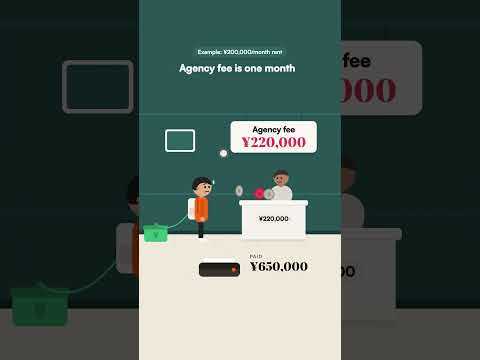
Watch our E-Housing explainer on why moving in costs so much.
We go through every line of that bill, including the ones people miss, in our guide to the essential fees to budget for when renting an apartment in Japan.
In this example the move-in bill is a little over four times the monthly rent.
Ask for the full invoice before you sign anything.
Renting in Gotanda as a Foreign Resident
Foreign renters can and do rent in Gotanda, but the usual Tokyo hurdles apply.
We do not have a foreign-resident count for Gotanda itself, because neither of the ward's population tables we used splits residents by nationality. What we can say is that the rules are the same as anywhere in Tokyo: some landlords prefer a Japanese guarantor, many accept a guarantor company instead, and some buildings do not take foreign tenants at all.
Expect to be asked for proof of income, a residence card and an employer reference. Have those ready before you start viewing.
We explain how guarantor companies work and how to compare them in our step-by-step guide to guarantor companies in Japan.
Watch why Japanese owners reject some applications.
If you are searching for a home here, tell us your budget and move-in date. We will shortlist buildings whose landlords accept foreign tenants and guarantor companies, and we will tell you which blocks are quiet at night and which are not.
Prepare your documents first, and Gotanda becomes easy to rent.
Supermarkets and Daily Shopping
Daily shopping in Gotanda is built around the station, and the west side is thinner than the east.
The anchor is the station complex itself. Atre Gotanda, the shopping building run on the Atre Gotanda site, sits next to JR Gotanda. The Tokyu area article we cite in the parks section below lists a Seijo Ishii supermarket, UNIQLO and McDonald's among its tenants, so confirm the current tenant list before you rely on it. Gotanda Tokyu Square, a shopping building connected directly to the JR and Ikegami Line platforms, houses a Tokyu Store.
For a one-person household that is enough: groceries and a quick lunch without leaving the station building.
Japanese area guides we read say the same thing from the other side. They describe the west side of Gotanda as lacking a large supermarket and tell residents to shop at the station or on the way home. These are agency pages and resident comments, not official statements, so we treat them as a reason to check the distance to your own nearest supermarket on a map before signing.
We could not verify other named supermarkets on the operators' own pages, so we leave them out rather than guess. Ask your agent for the nearest store to the exact building, and walk the route once in the evening.
Convenience stores and drugstores are the usual safety net in any Tokyo station area, and Gotanda is no exception.
Gotanda is a place where you shop on the commute, not on a weekend walk.
Food and Local Character
Gotanda eats like an office district: fast at lunch, loud after six, and quiet again after midnight on the back streets.
The area around the station is full of places to eat, which Japanese residents list as one of its real strengths. The flip side, in the same posts, is a nightlife image: love hotels, late drinkers and street touts near the station front. We cover that honestly in the safety section below.
We did not verify named restaurants on their own pages for this guide, so we are not going to recommend specific shops. Japanese resident posts describe a district of casual places to eat built around office workers and late drinkers, and that matches the station's commuter traffic.
Japanese residents also advise living a street or two back from the station, where the mood is calmer. That is the single most repeated tip in the Japanese pages we read.
If you want a lively street life at your door, Gotanda gives it to you only near the station.
Parks and Green Space
Gotanda is not a green place, but it has more small parks and riverside space than the station front suggests.
A Tokyu area article written in June 2025 gives walking times from Gotanda Station for the main ones. We use the Tokyu area article as the source for the times below, and these are approximate walks rather than measured routes.
- Gotanda Fureai Mizube Hiroba, a small riverside plaza on the Meguro River, about 3 minutes
- Gotanda Park, about 2 minutes from Toei Gotanda Exit A7
- Gotanda Minami Park, about 2 minutes
- Taniyama Park, about 7 minutes
- Nemunoki Garden, about 8 minutes, open 9:00 to 17:00 and closed 29 December to 3 January
- Onari-bashi Park, about 10 minutes and ringed by tall buildings
- Ikedayama Park, about 12 minutes, open 7:30 to 17:00, a 7,022 square meter stroll garden on the site of a former daimyo residence
- Nishi-Gotanda Park, about 15 minutes from JR Gotanda and about 4 minutes from Fudomae Station
Most of these are small neighborhood parks. Ikedayama Park is the one worth a special trip, and it is the closest thing Gotanda has to a proper garden.
If you want long, open lawns for a family, you will need to travel. If you want a bench, some trees and a quiet loop for a morning walk, Gotanda is fine.
Gotanda's green space is small, close and easy to use.
The Meguro River and the Redevelopment
The biggest change in Gotanda is happening on the river side, between Osaki and Gotanda, and it will finish in 2027.
Tokyu Land is rebuilding about 1.6 hectares of Higashi-Gotanda 2-chome along the Meguro River. Impress Watch reported the plan in January 2025: an office tower of 20 floors above ground, about 104 meters tall, due to complete in February 2027, and a residential tower of about 40 floors and 150 meters with 389 units, due in May 2027 with handover from August 2027. An earlier report gave the tower as 39 floors, so treat the exact floor count as approximate.
The part that matters to residents is the public space. A developer press release from October 2026 describes a park of about 1,500 square meters, provisionally called Higashi-Gotanda Sankaku Park, about 250 meters of riverside greenery and a community hub called TENOHA Osaki, expected around summer 2027. The 2025 article gives walking times of about 5 minutes to Osaki Station and 7 minutes to Gotanda Station.
The river itself is a mixed picture. The Meguro River gives the area a walking route and some open sky, and the Gotanda Fureai Mizube Hiroba is the best-known spot. Japanese residents also say the river can smell in warm weather, and some mention past flooding. We could not verify either point from an official source, so we report them as resident comments only.
Construction is scheduled to run until 2027, so check the work schedule before you sign for a flat near the site.
The riverside rebuild is a reason to look at Gotanda now rather than in five years.
Safety and the Station Front
Gotanda is safe enough for most residents most of the time, and the station front is the one place where it feels less safe than the numbers suggest.
Here is the honest picture from Japanese sources. Residents and agency pages repeatedly mention love hotels, late-night drinkers and street touts near the station, and they advise living a street or two away. Shinagawa Ward has an ordinance against touting in public places, and the ordinance text provides for a fine of up to ¥50,000 for ignoring a recommendation in a designated area. A ward leaflet we found lists the designated zones as Higashi-Gotanda 1 and 2-chome and Nishi-Gotanda 1 and 2-chome. The leaflet is undated, so check the current designation with the ward.
An English-language agency guide we read takes a different line. It describes Gotanda mainly as a business district whose reputation is "quite easy to avoid", and it does not mention touts, noise or the river. Both can be true: a newcomer who lives a few blocks from the station and uses it only to commute will rarely see the problem, while someone who comes home through the station front at night will.
The Metropolitan Police publish recorded incident counts by town. We used the 2025 town-level file, which is provisional, and divided each count by the number of residents in the ward's 1 August 2026 population table.
| Chome | Residents (1 Aug 2026) | Incidents recorded in 2025 | Per 1,000 residents |
|---|---|---|---|
| Higashi-Gotanda 1 | 2,659 | 87 | 32.7 |
| Higashi-Gotanda 2 | 4,518 | 46 | 10.2 |
| Higashi-Gotanda 3 | 2,381 | 8 | 3.4 |
| Higashi-Gotanda 4 | 2,438 | 8 | 3.3 |
| Higashi-Gotanda 5 | 3,606 | 12 | 3.3 |
| Nishi-Gotanda 1 | 696 | 39 | 56.0 |
| Nishi-Gotanda 2 | 2,561 | 39 | 15.2 |
| Nishi-Gotanda 3 | 7,109 | 30 | 4.2 |
| Nishi-Gotanda 4 | 4,633 | 17 | 3.7 |
| Nishi-Gotanda 5 | 5,052 | 19 | 3.8 |
| Nishi-Gotanda 6 | 3,255 | 6 | 1.8 |
| Nishi-Gotanda 7 | 1,125 | 24 | 21.3 |
| Nishi-Gotanda 8 | 2,631 | 10 | 3.8 |
| Gotanda, all 13 chome | 42,664 | 345 | 8.1 |
| Shinagawa Ward | 418,522 | 2,225 | 5.3 |
Source: Metropolitan Police town-level data for 2025 (provisional, page updated 13 Nov 2026) and the Shinagawa Ward population table for 1 Aug 2026. The counts include incidents involving visitors and commuters, not only residents, so small residential chome beside busy streets show inflated rates. We did not verify which offense categories the file covers, so do not compare these rates with Tokyo-wide totals.
The pattern is easy to read. Gotanda holds about 10 percent of the ward's residents and about 15 percent of its recorded incidents, and almost all of the difference comes from a handful of chome: Higashi-Gotanda 1 and 2, Nishi-Gotanda 1, 2 and 7. The other eight chome sit at or below the ward rate of 5.3 per 1,000.
That is the whole story of Gotanda's reputation in one table. The station area is busy and attracts incidents, and the quiet residential blocks behind it look like any other part of the ward. For a wider comparison of the city, see our guide to the safest and most dangerous places to live in Tokyo.
Choose the street, not the station name.
Disaster Risk and the Hazard Map
Gotanda sits beside a river and below some slopes, so check the hazard map for the exact address before you rent.
Shinagawa's flood hazard handbook says its inundation map covers the Meguro and Tachiai river basins at the maximum assumed rainfall, and that evacuation orders for Meguro River overflow start at Level 4. The same handbook shows many landslide (cliff) zones in Kita-Shinagawa, Higashi-Gotanda and Kami-Osaki.
The ward says in its hazard map Q&A that it cannot give you a flood depth for a specific address. It points residents to the Tokyo Bureau of Construction's flood inundation map page, which links to its flood risk search service, and to the ward's own sediment disaster page for landslide warning zones. The metropolitan landslide map that the ward page links to was down for maintenance when we checked on 23 Nov 2026, so check the ward page for the current link.
We have not quoted a flood depth for Gotanda, because none of the official pages we read gives one for the area as a whole. Do not rely on a rumor, a blog or an agent for this. Type the address into the official tools and keep a screenshot.
On earthquakes, the same rule applies as anywhere in Tokyo: ask for the building's completion date, because buildings completed after June 1981 were built to the current seismic code. We did not find a Gotanda-specific earthquake figure we could verify, so we do not quote one. Our guide to the flood-safe areas of Tokyo explains how to read the maps.
A five-minute check on the official maps is worth more than any area summary.
Healthcare
Gotanda has a large hospital with an English-language international department, and it is a short walk from the station.
NTT Medical Center Tokyo (NTT東日本関東病院) is in Higashi-Gotanda 5-chome. The hospital's partner guide (2024 edition) gives about 7 minutes on foot from JR Gotanda and about 5 minutes from Toei Gotanda, and 594 licensed beds. It lists an International Medicine department with English-speaking doctors, by appointment only, and a free shuttle from the JR east exit on weekdays from 8:00 to 17:45.
The same guide says it holds JMIP certification, a Japanese certification for medical institutions that accept international patients. Check current hours and the appointment process on the hospital's own site, because the guide is dated 2024.
Foreign residents on national or employer health insurance use it the same way as Japanese residents. Our guide to health insurance in Japan covers how to enroll.
Having an English-speaking hospital in walking distance is a real quality-of-life advantage.
Schools and Families
Gotanda works for children, but it is not set up around them the way a family suburb is.
The average household here is small: about 1.63 people per household across the 13 chome, against 1.72 for Shinagawa Ward as a whole. That points to a district of singles and couples.
We did not find a verified list of schools and school-zone boundaries for Gotanda in the sources we checked, so we do not name any here. Public elementary and junior high schools are assigned by address by Shinagawa Ward, so confirm the school zone for your exact building with the ward office before you sign.
If you plan to raise a family here, a 2LDK or 3LDK is available, but prices run above ¥295,000 and ¥387,000 on average, and the parks above are small. Osaki, Togoshi-Ginza and Fudomae all have lower 3LDK averages (about ¥328,000, ¥307,000 and ¥360,000), so a family with a tight budget should compare them.
Gotanda is a better fit for a young family that wants a short commute than for one that wants a big yard.
Best Areas Within Gotanda
The 13 chome of Gotanda behave like different neighborhoods, and the table above is the quickest guide to which is which.
Higashi-Gotanda (東五反田) holds the two highest-rate blocks, 1-chome and 2-chome, and it also has NTT Medical Center in 5-chome and the riverside rebuild in 2-chome. Higashi-Gotanda 3, 4 and 5 recorded about 3 incidents per 1,000 residents in 2025, well under the ward rate, while 1 and 2 are the high-rate blocks.
Nishi-Gotanda (西五反田) is the bigger residential side, with 27,062 of the district's 42,664 residents. Nishi-Gotanda 3, 4, 5, 6 and 8 all show low recorded rates, and 3-chome has the most residents of any Gotanda block at 7,109.
Japanese agency pages that we read give the same advice in plain terms: prefer Nishi-Gotanda over Higashi-Gotanda for a quiet life, and live a street back from the station. Our numbers support the first half only partly, because Nishi-Gotanda 1, 2 and 7 post high rates too. The better rule is to choose by chome, not by the east and west names.
Before you commit, walk the route from the building to the station at 11 p.m., not at noon.
The best block in Gotanda is the one that is a few minutes from the station but not on the main approach to it.
Pros and Cons of Living in Gotanda
Gotanda's strengths are all about movement and price, and its weaknesses are all about the station front.
What works
- A short ride on the Yamanote Line to Shinagawa (about 6 minutes), Shibuya (about 7 to 8) and Shinjuku (about 15), with no transfer
- Three lines at one station: JR Yamanote, Tokyu Ikegami and Toei Asakusa
- Rents below Meguro and Shinagawa for most layouts
- An English-capable hospital about 7 minutes on foot from JR Gotanda
- A riverside rebuild due in 2027 that adds a park and about 250 meters of riverside greenery
- Residential blocks, mainly in Nishi-Gotanda, where the recorded incident rate is low
What does not
- A station front with love hotels, late drinkers and street touts, according to Japanese residents, and a ward ordinance aimed at the problem
- A high incident rate in five of the 13 chome, mostly near the station
- Small parks and no large green space within a short walk
- No verified large supermarket on the west side
- River and cliff hazards that vary by address and need a check on the official maps
- Construction around Higashi-Gotanda 2-chome until 2027
A fair summary is that the good parts are structural and the bad parts are local, so the right apartment can avoid most of them.
Who Should Live in Gotanda
Gotanda is best for people whose life runs along the Yamanote Line.
- Singles and couples who work in Shinagawa, Shibuya, Shinjuku or central Tokyo and want a short, direct commute at a lower rent than Meguro
- Frequent Haneda travelers, since the typical trip takes about 39 minutes with two transfers
- People who want a one-person apartment on a quiet block a few minutes from a big station
- Anyone who values having an English-capable hospital nearby
If you fit this list, Gotanda is one of the more practical places to start a Tokyo lease.
Who May Not Like Gotanda
Gotanda is a poor fit for anyone who wants the neighborhood itself to be the destination.
- Light sleepers who are considering an apartment near the station front
- Families who want large parks, big supermarkets and quiet streets at the door
- Anyone who dislikes crowded mornings, since the station handles about 110,000 JR boardings a day
- People who need a verified flood and landslide check on every address and do not want to do it themselves
- Anyone who wants a quiet village feel or a strong local shopping street
If that sounds like you, look at the areas in the next section before you sign.
Gotanda vs Osaki, Meguro, Shinagawa and Togoshi-Ginza
Gotanda lands in the middle of its neighbors on price and near the top on speed.
| Area | Average 1K Rent | Average 2LDK Rent | Character | Best For |
|---|---|---|---|---|
| Gotanda | ~¥113,000 | ~¥295,000 | Business and residential, with a busy station front | Short Yamanote commutes at a mid-range rent |
| Osaki | ~¥100,000 | ~¥249,000 | A larger station, 145,194 JR boardings a day | Renters who want the same line and a lower rent |
| Meguro | ~¥129,000 | ~¥299,000 | A higher-priced station on the Yamanote Line | Renters who prefer a more polished feel |
| Shinagawa | ~¥115,000 | ~¥337,000 | The ward's main rail hub | Renters who need shinkansen and airport access |
| Togoshi-Ginza | ~¥101,000 | ~¥237,000 | On the Tokyu Ikegami Line, the line that ends at Gotanda | Budget-focused renters who accept local trains |
Japanese rental market data (average of the last three months of listings, read 23 Nov 2026). Character and best-for notes are our own summary.
The 1K gap tells most of the story. Osaki and Togoshi-Ginza are about ¥12,000 cheaper per month, Meguro about ¥16,000 more expensive, and Shinagawa only about ¥2,000 above Gotanda. On a 2LDK, Shinagawa is about ¥42,000 above Gotanda and Togoshi-Ginza about ¥58,000 below. Fudomae, a Tokyu Meguro Line station, averages about ¥109,000 for a 1K and about ¥269,000 for a 2LDK.
Our Nakameguro guide and the Ebisu guide linked earlier show what the higher-priced neighbors feel like.
Osaki is the clear alternative if you want almost the same commute for less rent.
Practical Advice from E-Housing
The best way to rent in Gotanda is to choose a street first, a building second and a floor plan last.
- Walk from the building to the station at 11 p.m. before you sign. The route matters more than the distance
- Check the chome in the safety table above, and ask what is on the ground floor and next door
- Type the exact address into the official flood and landslide tools and save the result
- Ask which year the building was completed, and about its seismic standard
- Ask whether construction is planned beside the building until 2027
- Compare Osaki and Togoshi-Ginza listings before you commit, because the rent difference is large for the same commute
- Ask for the full move-in invoice, and compare it against the worked example above
A few extra minutes of walking from the station front is usually the cheapest way to buy a quieter night.
Final Verdict: Should You Live in Gotanda?
Gotanda is worth living in if you want the fast Yamanote Line commute and will pick your street carefully.
The case for it is simple. The station puts Shinagawa, Shibuya and Shinjuku within about 15 minutes, rent for a one-person apartment is below Meguro, and the riverside rebuild will add a park by 2027. The case against it is just as simple. The station front has a reputation that the police data partly confirms, the parks are small, and flood and landslide risk depends on the address.
That is the divergence at the center of this guide. Japanese residents are wary of the station front and tell you to live a street back, while English-language guides call the reputation easy to avoid. Both are right, and the difference is where you live.
Living in Gotanda is a good deal for people who treat the station as a tool and the quiet blocks as home.
At E-Housing, we work with foreigners, expat families, international students and working professionals across greater Tokyo every day. We know which Gotanda buildings are on quiet blocks, which landlords accept guarantor companies and where the move-in costs are fair.
Tell us your budget, your office location and your move-in date, and we will shortlist Gotanda apartments that match them, and tell you honestly when Osaki or Togoshi-Ginza is the better choice.
FAQ: Living in Gotanda, Tokyo
Is Gotanda a good place to live in Tokyo?
Yes, if you want a fast Yamanote Line commute and a mid-range rent. The best blocks are a few minutes back from the station front.
Is Gotanda safe?
Mostly yes. Gotanda's recorded incident rate in 2025 was about 8.1 per 1,000 residents against 5.3 for Shinagawa Ward, and the higher figure comes from a handful of chome near the station.
Is Gotanda a good place to stay in Tokyo?
Yes, for a short stay it is a practical base because the Yamanote Line reaches Shinagawa, Shibuya and Shinjuku quickly. A quiet block away from the station front is more comfortable at night.
How much is rent in Gotanda?
A 1K averages about ¥113,000 per month and a 2LDK about ¥295,000, according to Japanese rental market data read on 23 Nov 2026. Treat these as averages rather than ceilings.
How long does it take to get from Gotanda to Shinjuku?
About 15 minutes on the Yamanote Line with no transfer. Shibuya takes about 7 to 8 minutes and Shinagawa about 6.
How long does it take to get from Gotanda to Tokyo Station?
About 17 to 19 minutes on the Yamanote Line with no transfer, based on Japanese route-search data.
How do you get from Narita Airport to Gotanda Station?
The usual route is the Keisei Skyliner to Nippori, then the Yamanote Line to Gotanda, taking about 1 hour 18 minutes and costing about ¥2,930 including the reserved-seat supplement.
How do you get from Haneda Airport to Gotanda Station?
A typical trip takes about 39 minutes with two transfers and costs about ¥490, using the Yamanote Line to Shinagawa and then the Keikyu Line.
Which train lines serve Gotanda Station?
Three: the JR Yamanote Line, the Tokyu Ikegami Line and the Toei Asakusa Line. The Ikegami Line ends here.
Is Gotanda cheaper than Meguro?
Yes for most layouts. A 1K averages about ¥113,000 in Gotanda against about ¥129,000 in Meguro, though a 2LDK is only about ¥4,000 cheaper.
Is Osaki cheaper than Gotanda?
Yes. Osaki's 1K averages about ¥100,000 and its 2LDK about ¥249,000, and it is the next stop on the Yamanote Line.
Does Gotanda have an English-speaking hospital?
Yes. NTT Medical Center Tokyo has an International Medicine department with English-speaking doctors by appointment, about 7 minutes on foot from JR Gotanda.
Does Gotanda flood?
It can. The ward's handbook shows an inundation map for the Meguro and Tachiai river basins at the maximum assumed rainfall, and many landslide zones in Higashi-Gotanda. Check the exact address with the official tools.
Does Gotanda have a nightlife problem?
Near the station, yes. Japanese residents mention love hotels, drunks and touts, and the ward has an ordinance against touting in designated zones in Higashi- and Nishi-Gotanda 1 and 2-chome.
Can foreigners rent in Gotanda without a Japanese guarantor?
Yes in most cases, using a guarantor company. Some landlords still prefer a Japanese guarantor, so ask early.
What is the best part of Gotanda to live in?
It depends on the chome. Nishi-Gotanda 3 to 6 and 8 and Higashi-Gotanda 3 to 5 all showed low recorded incident rates in 2025.
What is there to do in Gotanda?
Mostly everyday life: small parks, the Meguro River plaza and Ikedayama Park, a stroll garden about 12 minutes on foot. Gotanda is not a tourist destination.
Share article
Get In Touch
Let’s Connect! How Can We Assist?
E-Housing connects you with quality properties across Tokyo. Whether you’re renting, buying or selling, our experts are ready to help. Fill out the form below for a response within 24 hours.